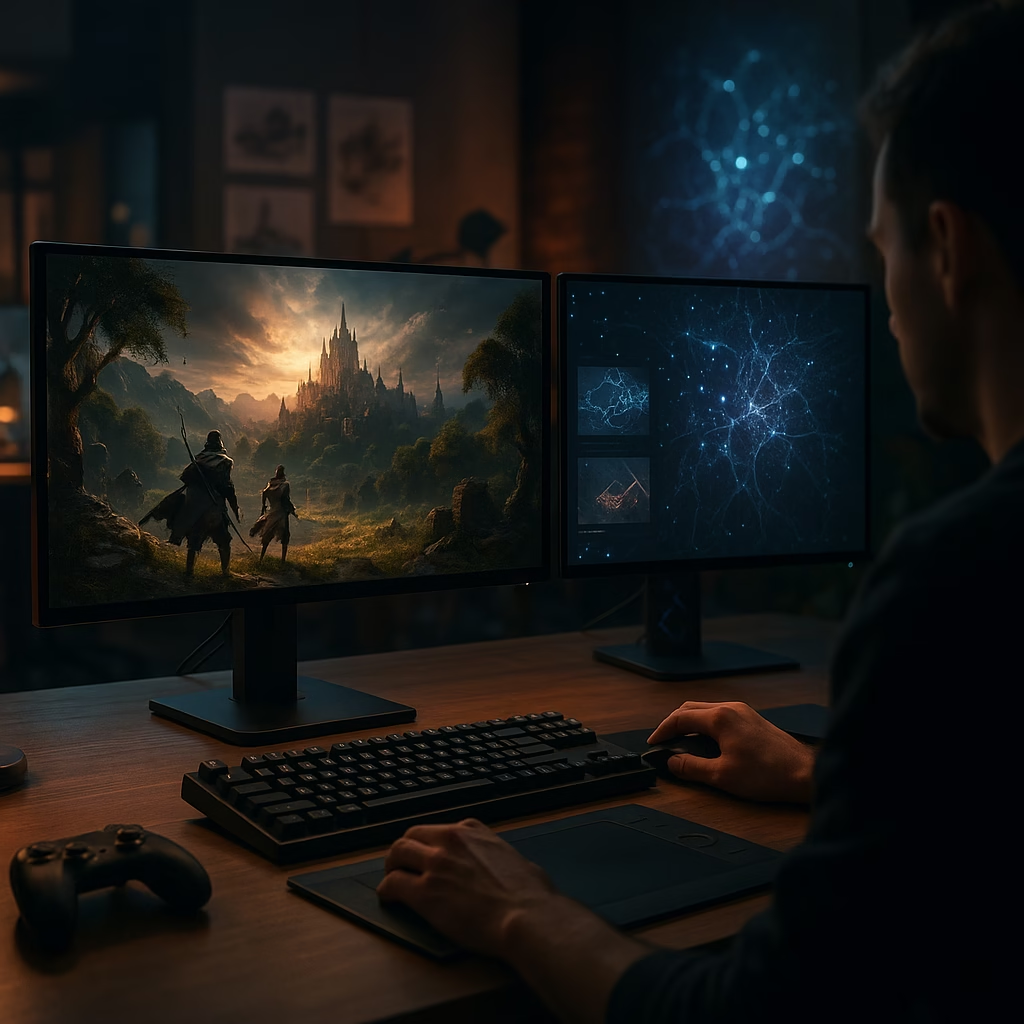
Larian Embraces Generative AI While Vowing Zero Slop In Games
Larian Studios, the acclaimed developer behind Baldur’s Gate 3 and the Divinity: Original Sin series, is experimenting with generative AI—but with a firm promise: the studio will not let automated tools dilute its creative standards or flood its games with low‑effort “slop.” In a moment when AI market growth and rapid adoption of machine learning tools are reshaping multiple industries, Larian is trying to walk a careful line between leveraging new technology and protecting the human craft that defines its games.
A Careful Step Into Generative AI
In a recent community update and follow‑up comments reported by Kotaku, Larian confirmed that it is actively researching and prototyping generative AI tools. This includes exploring ways AI might support internal workflows such as:
- Assisting with content prototyping during early design phases
- Helping with iteration and testing on complex branching narratives
- Potentially streamlining some production pipelines so human teams can focus on high‑impact creative work
However, the studio stressed that AI will not be used as a shortcut for writing, performance, or design in the finished product. The goal is to improve efficiency behind the scenes, not to replace writers, actors, or artists—or to churn out generic content that undermines the studio’s reputation for depth and detail.
Why Fans Are Wary Of AI In Games
The reaction to any mention of AI in game development has become increasingly tense. Across the industry, players and developers have raised concerns about:
- Job displacement for writers, artists, and voice actors
- The rise of AI-generated “slop”—cheap, low‑quality content made to fill space
- Ethical issues around training models on copyrighted work without consent
- The potential erosion of distinct creative voices in favor of algorithmically averaged output
These worries are not abstract. Over the past few years, multiple studios and publishers have tested AI‑driven tools for voice synthesis, automated art, or dialogue generation, prompting fierce pushback from unions, actors, and fans. At the same time, the broader economic conversation around productivity gains and future of work has put AI at the center of debates about how creative labor is valued.
“No Slop” As A Design Philosophy
Larian’s leadership has been explicit that quality remains non‑negotiable. The studio’s games are known for:
- Handcrafted quests with meaningful choices and consequences
- Extensive reactive dialogue and character interactions
- Rich, systemic gameplay where player agency drives outcomes
This level of detail helped Baldur’s Gate 3 stand out in a crowded market and win multiple Game of the Year awards. Larian argues that this kind of deeply reactive, authored experience cannot be mass‑produced by algorithms without losing what makes it special. Any use of generative AI, therefore, has to support that vision rather than undermine it.
The studio’s message is clear: tools are acceptable; replacing human creativity is not. Larian is framing AI as a way to handle drudge work or speed up internal processes—not as a magic button that writes story arcs or designs worlds.
AI, Costs, And The Economics Of Big RPGs
Large role‑playing games are expensive to make. As development costs rise and teams grow larger, studios are under pressure to deliver more content without blowing up budgets or timelines. This economic reality is part of why so many companies are exploring AI in the first place.
In a broader economic outlook where studios are contending with uncertain revenue, shifting consumer habits, and intense competition, AI is often pitched as a way to maintain growth and manage risk. But the fear among players is that these cost‑cutting measures will lead to homogenized, low‑effort games—especially if executives see generative AI as a replacement for skilled workers rather than a support tool.
Larian is positioning itself against that trend. By publicly committing to “zero slop” and emphasizing that people remain at the center of its creative process, the studio is trying to reassure both its employees and its audience that experimentation with AI will not come at the expense of craft.
Trust, Transparency, And The Future Of Larian’s Games
The studio’s stance also reflects a growing recognition that transparency is crucial. Players are more informed and more skeptical than ever about how games are made. When a developer quietly introduces AI‑generated art or dialogue, the backlash can be swift, especially in an environment already shaped by concerns about labor practices and corporate consolidation.
By addressing its AI research directly, Larian is inviting scrutiny but also building trust. It’s effectively setting expectations: yes, we will explore these tools, but no, we will not let them define our games. This nuanced approach may become increasingly common as studios attempt to balance the promise of automation with the demand for authenticity.
For fans of Divinity and Baldur’s Gate 3, the message is cautiously reassuring. Larian is not rejecting new technology outright, but it is drawing a clear line: whatever efficiencies generative AI might bring, the studio’s identity remains grounded in human‑driven storytelling, performance, and design. In an era of rapid AI adoption and shifting tech industry trends, that commitment could become one of its strongest competitive advantages.
Reference Sources
Kotaku – Larian Studios Talks Generative AI And Promises No Slop In Its Games





Leave a Reply