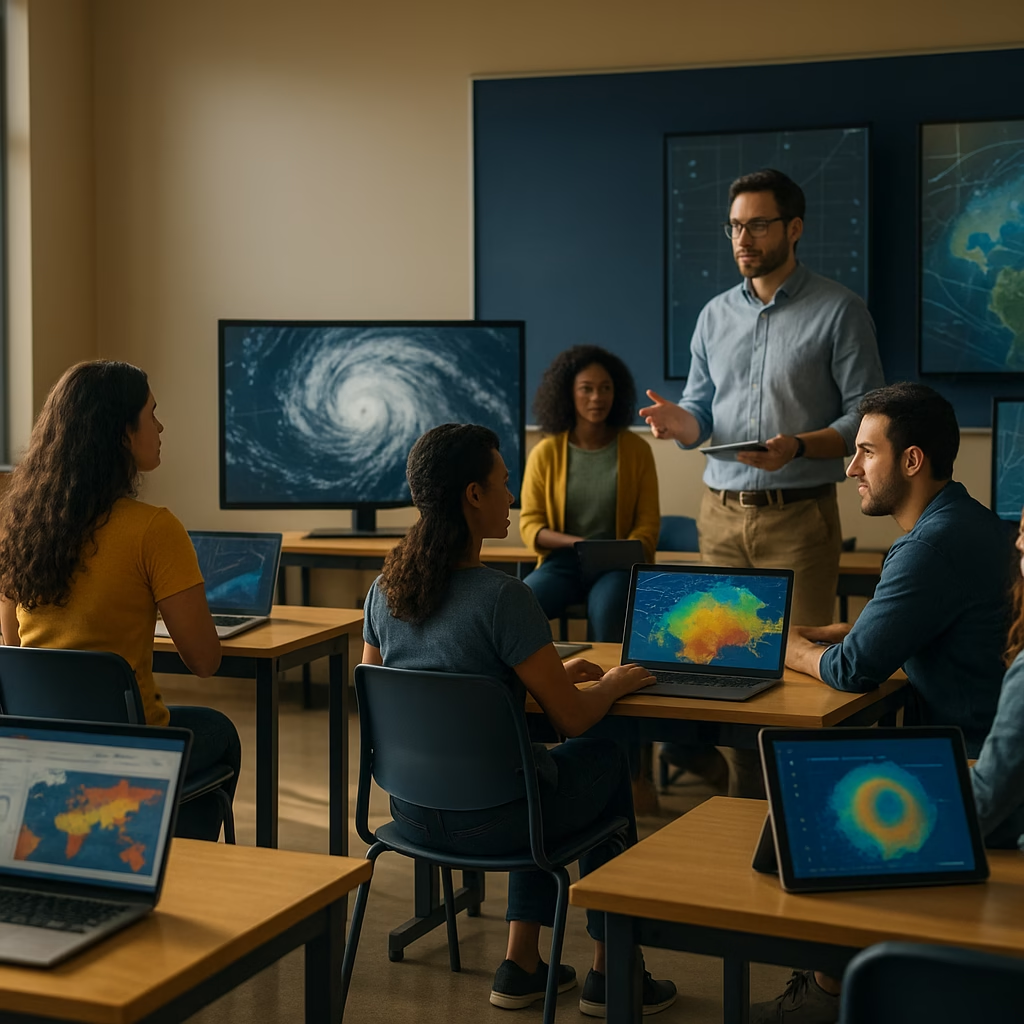
WVU Expands NOAA Data Integration Program Across Classrooms in Year Two
West Virginia University is building momentum in its second year of an innovative teaching initiative that helps faculty bring real-time NOAA environmental data into a wider range of courses. The program’s goal is straightforward but powerful: make authentic, data-driven learning a standard part of the student experience—so learners practice the same analytical thinking and decision-making skills used in weather, climate, water, and hazard-related careers.
Across higher education, employers increasingly value graduates who can interpret datasets, validate sources, and communicate evidence clearly. Environmental data literacy is especially relevant as communities, utilities, emergency managers, and businesses respond to more frequent disruptions—from extreme rainfall and flooding to heat waves and drought. NOAA, as one of the United States’ primary scientific agencies for weather and climate information, offers large public datasets that are ideal for teaching. WVU’s expanding effort essentially acts as a bridge between those datasets and everyday classroom learning.
From specialized research to everyday learning
Historically, many NOAA tools and datasets were used primarily in advanced research labs or upper-level courses. WVU’s program helps change that by supporting instructors who want to embed data exercises into curricula in ways that are appropriate for different academic levels and disciplines. In practice, that can mean moving beyond textbook examples and instead asking students to work with current observational and forecast information, build visualizations, and explain uncertainty—skills that transfer well to both STEM and policy-oriented roles.
This second-year expansion signals that the approach is working: once faculty see students engage more deeply with real-world data, the demand grows for training, templates, and shared teaching materials. The program’s continued growth also reflects a broader trend in university teaching—more emphasis on experiential learning and “learning by doing,” particularly where public-facing science affects everyday life.
Why NOAA data matters now
NOAA data is widely used by meteorologists, hydrologists, climate scientists, and planners because it is consistent, regularly updated, and designed for public access. Bringing that information into classrooms supports a modern form of literacy: understanding how environmental information is produced and how it should be interpreted.
- Workforce readiness: Students gain experience with the kinds of datasets and workflows used in government, consulting, and industry.
- Public decision relevance: Data-based reasoning connects directly to risk communication, emergency preparedness, and infrastructure planning.
- Interdisciplinary learning: Environmental data can support lessons in statistics, communication, geography, public policy, data visualization, and more.
As data becomes central to nearly every field, the ability to work with NOAA resources—such as weather observations, climate normals, and water-related monitoring—becomes a practical advantage for graduates.
How the program supports instructors and students
Scaling data integration across multiple classrooms requires more than access to datasets. Faculty often need structured support: guidance on selecting appropriate tools, designing assignments, and aligning activities with learning outcomes. WVU’s initiative emphasizes that adoption should be repeatable and sustainable, not dependent on one-off efforts.
In expanded year-two implementation, participating instructors can adapt NOAA data to their course goals—whether that means short in-class labs, multi-week projects, or assignments that teach students to evaluate data quality and limitations. This approach also helps students practice communicating findings clearly, a critical competency when scientific information must be shared with non-technical audiences.
Long-term value for the university and the state
WVU’s continued investment in NOAA data integration aligns with regional needs. West Virginia’s terrain and hydrology can make communities vulnerable to events like flash flooding, while broader climate variability affects agriculture, water systems, and public health. When students learn to interpret environmental data, they are better prepared to contribute to local problem-solving—whether in public agencies, private firms, or community organizations.
More broadly, initiatives like this help universities strengthen the connection between classroom learning and real-world outcomes. They also support a culture of evidence-based reasoning at a time when data—accurate, transparent, and responsibly interpreted—is essential to public trust.
Conclusion
By expanding its NOAA data integration program into a second year, West Virginia University is reinforcing a modern educational priority: students learn best when they can apply authentic information to meaningful questions. As NOAA datasets continue to shape how the nation understands weather and climate risk, WVU’s effort positions more students to graduate with practical data skills, stronger scientific literacy, and a clearer view of how environmental information informs decisions that affect communities every day.
Reference Sources
NOAA Education — Teaching resources and learning materials
NOAA — Data and information access
National Weather Service API Documentation — Weather data for developers and educators






Leave a Reply