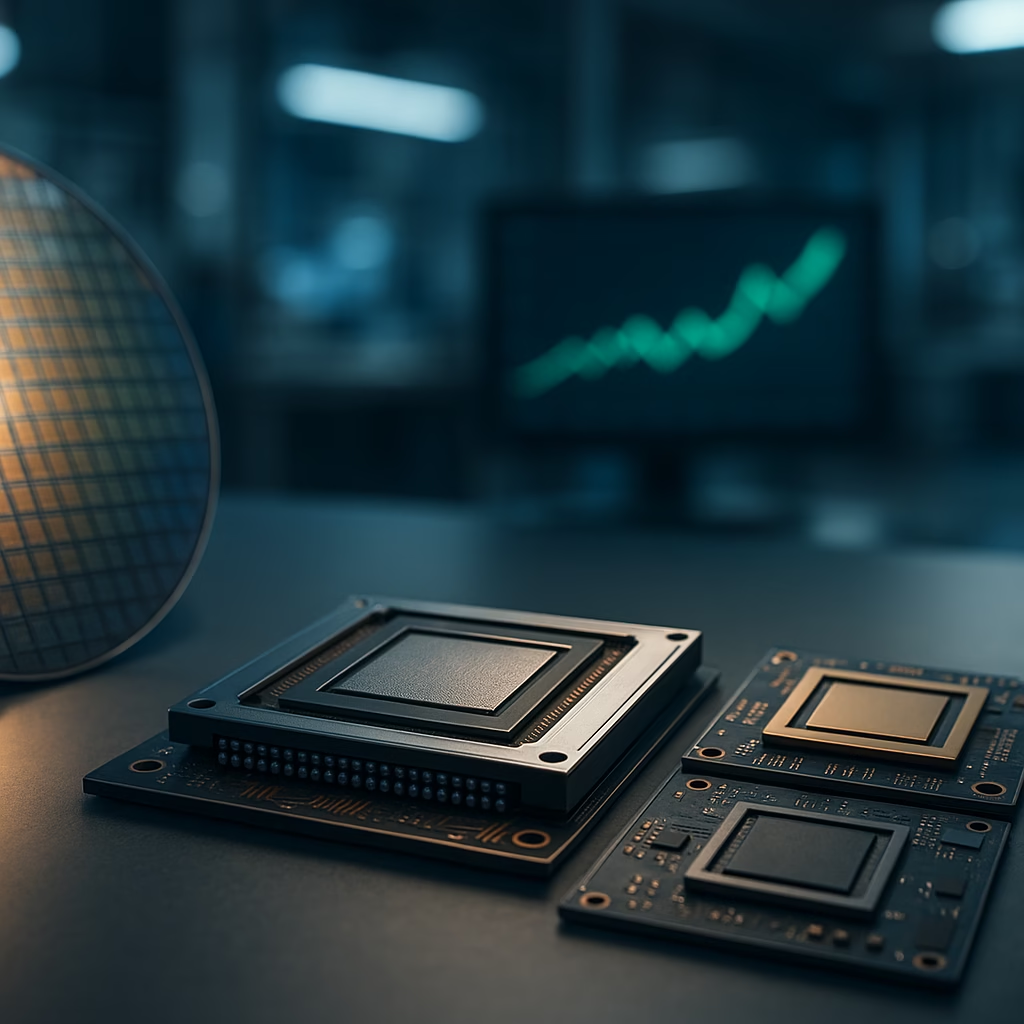
Nvidia AMD and TSMC chip stocks surge on AI demand
Investor enthusiasm for artificial intelligence has once again lifted major semiconductor names, with Nvidia, Advanced Micro Devices (AMD), and Taiwan Semiconductor Manufacturing Company (TSMC) benefiting from renewed confidence that AI infrastructure spending will remain strong. The rally reflects a broader market narrative: as enterprises and governments race to deploy generative AI, demand is rising not only for cutting-edge chips, but also for the manufacturing capacity and advanced packaging needed to produce them at scale.
Why AI demand is translating into chip-stock momentum
Generative AI workloads are unusually compute-intensive. Training large models and running inference across millions of users requires high-performance GPUs, fast networking, and vast data-center buildouts. This is why semiconductor companies tied to AI compute are increasingly treated as “picks and shovels” investments in the AI boom. When markets gain confidence that AI spending is durable—not a short, speculative cycle—chip stocks often respond quickly.
In practical terms, AI demand supports multiple layers of the supply chain:
- Design leaders that produce the most sought-after accelerators and platforms for AI computing.
- Foundries that can manufacture leading-edge chips at advanced process nodes.
- Packaging and memory ecosystems that enable higher bandwidth and better performance per watt.
Nvidia: still the bellwether for AI accelerators
Nvidia remains the market’s primary reference point for AI hardware demand. Its data-center GPUs and broader software ecosystem have become central to how many organizations deploy generative AI. As enterprise adoption expands—from customer support automation to code generation and analytics—investors often view Nvidia as a direct beneficiary of capital expenditure flows into AI-ready data centers.
Another reason Nvidia’s moves can influence the sector is psychological and structural: when the company signals robust demand or strong forward guidance, it tends to lift sentiment across semiconductors, even for firms serving adjacent parts of the AI stack. This “halo effect” helps explain why rallies frequently spread to peers and partners.
AMD: growing credibility in data-center AI
AMD has increasingly positioned itself as a serious contender in AI compute, particularly in data-center environments where customers seek performance, energy efficiency, and supply diversity. In a market where large cloud providers and enterprises want alternatives and additional capacity, AMD’s progress in accelerators and CPUs can be interpreted as an expanding addressable opportunity.
From an industry perspective, the AI cycle is not only about who leads today, but also about who can capture incremental share as model sizes grow and inference becomes mainstream. That is a key reason investors track AMD closely whenever AI demand headlines strengthen.
TSMC: the manufacturing backbone of advanced AI chips
TSMC plays a different—but essential—role. Many of the world’s most advanced chips are manufactured using TSMC’s leading-edge processes, making it a crucial enabler of the AI hardware boom. When AI accelerator demand rises, it often implies greater utilization at advanced nodes and sustained long-term investment in capacity, tooling, and yield improvements.
TSMC’s importance also highlights a broader economic truth: AI is a capital-intensive transformation. Beyond chip designers, the companies that can reliably manufacture at scale—and do so with high yields—become central beneficiaries of the trend.
What this surge says about the wider market
The renewed strength in AI-linked chip stocks signals that investors still believe AI is evolving from experimentation into deployment. Over the past two years, markets have repeatedly rotated between excitement and caution as they weigh valuations, interest rates, and the pace of enterprise adoption. Yet the underlying driver remains consistent: productivity gains from AI are compelling enough that businesses are willing to invest heavily in compute.
Key forces supporting this theme include:
- Cloud expansion as hyperscalers build AI-specific regions and upgrade data-center fleets.
- Enterprise adoption as companies shift from pilots to production use cases.
- Efficiency improvements in chips and systems that lower the cost per AI task over time, encouraging more usage.
Risks to watch despite bullish sentiment
Even with strong momentum, semiconductor investors typically monitor a few recurring risks. AI demand may be robust, but the sector is historically cyclical, and expectations can move faster than real-world deployments. In addition, supply constraints, export controls, and shifting macroeconomic conditions can affect how quickly revenues convert from demand signals into shipped products.
Still, the market’s reaction underscores a clear point: AI has become one of the most powerful demand drivers in the semiconductor industry, influencing not just one company’s outlook, but the entire ecosystem from design to manufacturing.
Conclusion: AI is reshaping the chip landscape
The surge in Nvidia, AMD, and TSMC reflects a growing consensus that AI infrastructure spending is not a passing trend—it is a multi-year rebuild of computing. As model adoption expands and AI becomes embedded across software products and business workflows, the semiconductor supply chain is likely to remain a focal point for investors. While volatility is inevitable, the strategic importance of AI chips and advanced manufacturing continues to strengthen the long-term narrative for the sector.
Reference Sources
Nvidia, AMD and Taiwan Semiconductor chip stocks surge on AI demand (ITP.net)
Reuters Technology News (coverage of AI chips and semiconductor markets)
The Wall Street Journal – AI (ongoing reporting on AI infrastructure and chips)
Financial Times – Semiconductors
Bloomberg Technology (semiconductors and AI market coverage)






Leave a Reply