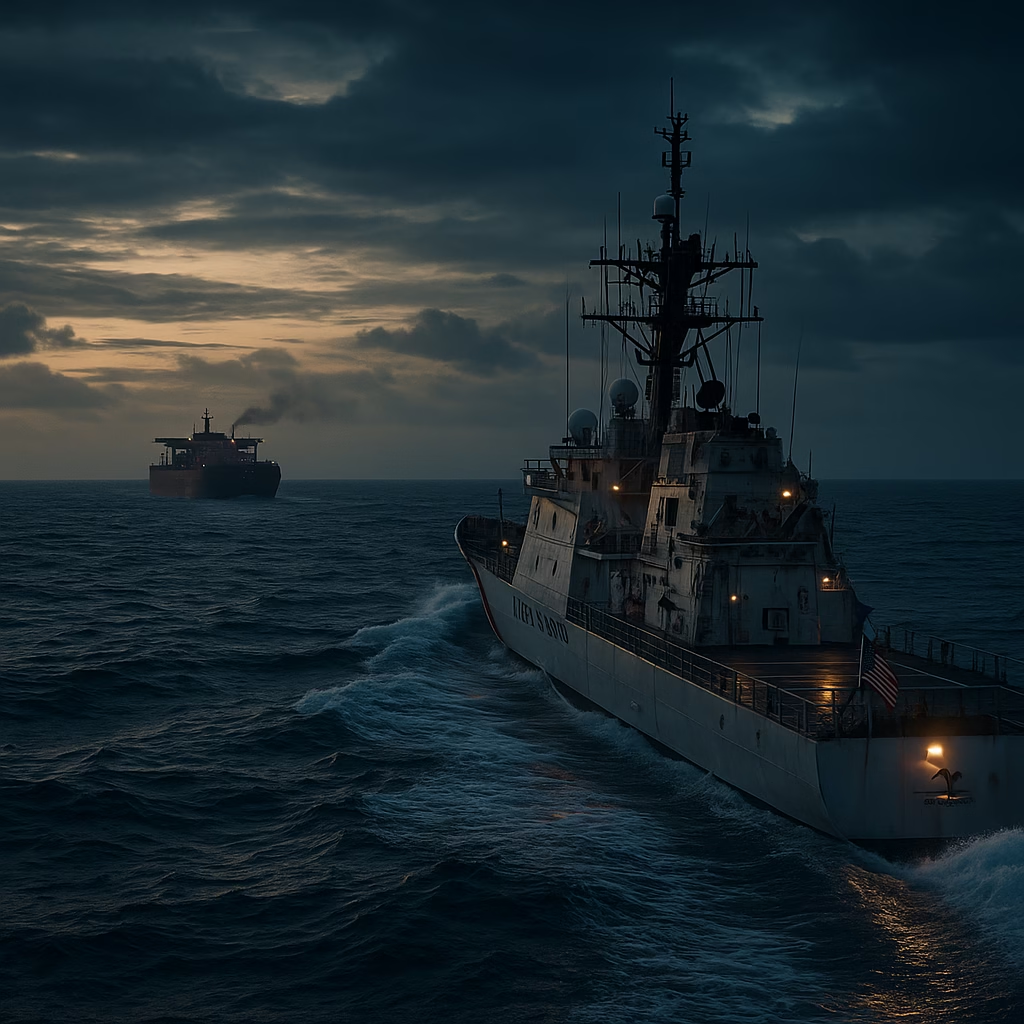
The unfolding pursuit of a Venezuelan-linked tanker by the US Coast Guard highlights how maritime security, sanctions enforcement, and energy geopolitics are increasingly colliding on the high seas. While this incident has immediate operational implications, it also fits into a broader pattern of how countries police global shipping routes, protect critical energy flows, and enforce complex international rules.
US Coast Guard’s High Seas Pursuit and Why It Matters
Reports indicate that a tanker with alleged ties to Venezuela has drawn the attention of the US Coast Guard in international waters, prompting a high seas pursuit. Although specific operational details remain limited, the situation underscores Washington’s determination to monitor vessels suspected of violating US sanctions or engaging in questionable maritime activity.
The United States has, for years, used a combination of financial restrictions, ship tracking, and maritime interdictions to enforce its sanctions regime. In the case of Venezuela, these measures are aimed at the country’s oil exports, a crucial source of revenue for its embattled economy and government. Tankers suspected of moving sanctioned crude or refined products can find themselves under intense scrutiny, even when operating far from US territorial waters.
Sanctions, Shipping, and the Global Oil Trade
The tanker incident is best understood against the backdrop of a global oil market that is still adjusting to shifts in supply chains, regional conflicts, and changing demand. While the broader economic outlook is shaped by issues like inflation trends and uncertain growth prospects, the energy sector remains especially sensitive to disruptions in shipping lanes and supply routes.
US sanctions on Venezuela’s state-controlled oil sector are designed to limit the country’s access to hard currency and international financing. For shipowners, insurers, and traders, this creates a complex compliance environment:
- Ownership structures: Many tankers operate through layered corporate entities, complicating efforts to determine their ultimate beneficial owners.
- Flag of convenience: Ships can change flags, names, and management, making it harder to track vessels suspected of sanctions evasion.
- Ship-to-ship transfers: Cargo can be moved between tankers at sea, obscuring the origin of oil and the final destination of shipments.
As a result, Western governments and regulators have increasingly turned to advanced vessel-tracking technology, satellite imagery, and data analytics to detect suspicious movements. The Coast Guard’s pursuit of a Venezuelan-linked tanker is emblematic of how these enforcement tools sometimes culminate in direct operational action.
Maritime Law and High Seas Enforcement
Operations like this are governed by a patchwork of international rules. Under the United Nations Convention on the Law of the Sea (UNCLOS), ships on the high seas generally fall under the jurisdiction of their flag state. However, when sanctions or suspected illicit activities are involved, countries may seek cooperation from flag states or use their own legal frameworks to justify interdictions, inspections, or detentions.
In practice, the United States relies on a mix of:
- Domestic legislation that allows it to target sanctioned entities and those who materially support them.
- International partnerships with allies and regional coast guards to share intelligence and coordinate patrols.
- Diplomatic pressure on flag states and port authorities to deny services to vessels linked to sanctioned activities.
The high seas pursuit of a tanker sends a message to shipowners and operators that sanctions enforcement is not limited to financial penalties; it can extend to real-time tracking and potential interception.
Venezuela’s Oil Sector Under Pressure
Venezuela’s economy has long been dependent on oil exports. Over the last decade, however, declining production, infrastructure decay, and sanctions have severely constrained its capacity to sell crude on open markets. This has encouraged some actors to seek alternative routes and buyers, sometimes operating in legal gray zones.
These dynamics affect not only Venezuela but also the broader global energy system. When sanctioned oil enters the market at discounted prices, it can influence oil price volatility and complicate trading patterns. Traders, refiners, and transport companies must balance commercial opportunities with growing legal and reputational risks.
Risk Management for the Shipping and Energy Industries
The tanker pursuit underscores the need for robust compliance and risk management in the shipping and energy sectors. In an era when regulators scrutinize vessel movements as closely as financial flows, companies are investing more heavily in:
- Sanctions screening tools to cross-check ships, cargoes, and counterparties against evolving watchlists.
- Real-time vessel tracking using AIS data, satellite imagery, and analytics to detect unusual routing or behavior.
- Legal and compliance expertise to interpret sanctions guidance and respond quickly to regulatory changes.
These efforts are driven not only by legal obligations but also by concerns about long-term market stability and corporate reputation. In an interconnected global economy, a single controversial shipment can trigger investigations, contract disputes, or loss of access to key financial services.
Geopolitics, Security, and the Future of Maritime Enforcement
The incident involving a Venezuelan-linked tanker and the US Coast Guard is part of a broader trend in which maritime security, geopolitics, and energy policy are increasingly intertwined. Strategic waterways—from the Caribbean and the Gulf of Mexico to the Strait of Hormuz and the South China Sea—are now arenas where economic and security interests converge.
Looking ahead, several themes are likely to shape how such incidents evolve:
- Heightened geopolitical competition: Rivalries among major powers can influence how strictly sanctions are enforced and how maritime incidents are interpreted.
- Technological advances: Improved satellite surveillance, AI-driven data analysis, and digital compliance tools will make it harder for suspect vessels to operate unnoticed.
- Regulatory complexity: As more countries introduce or adjust sanctions regimes, shipping companies will have to navigate a more fragmented and demanding regulatory landscape.
In this context, the high seas pursuit of a tanker is not merely an isolated enforcement action. It reflects a wider shift toward more assertive monitoring of global trade routes and greater scrutiny of how energy commodities move around the world.
Reference Sources
BBC News – US Coast Guard tracks Venezuela-linked tanker in high seas pursuit






Leave a Reply