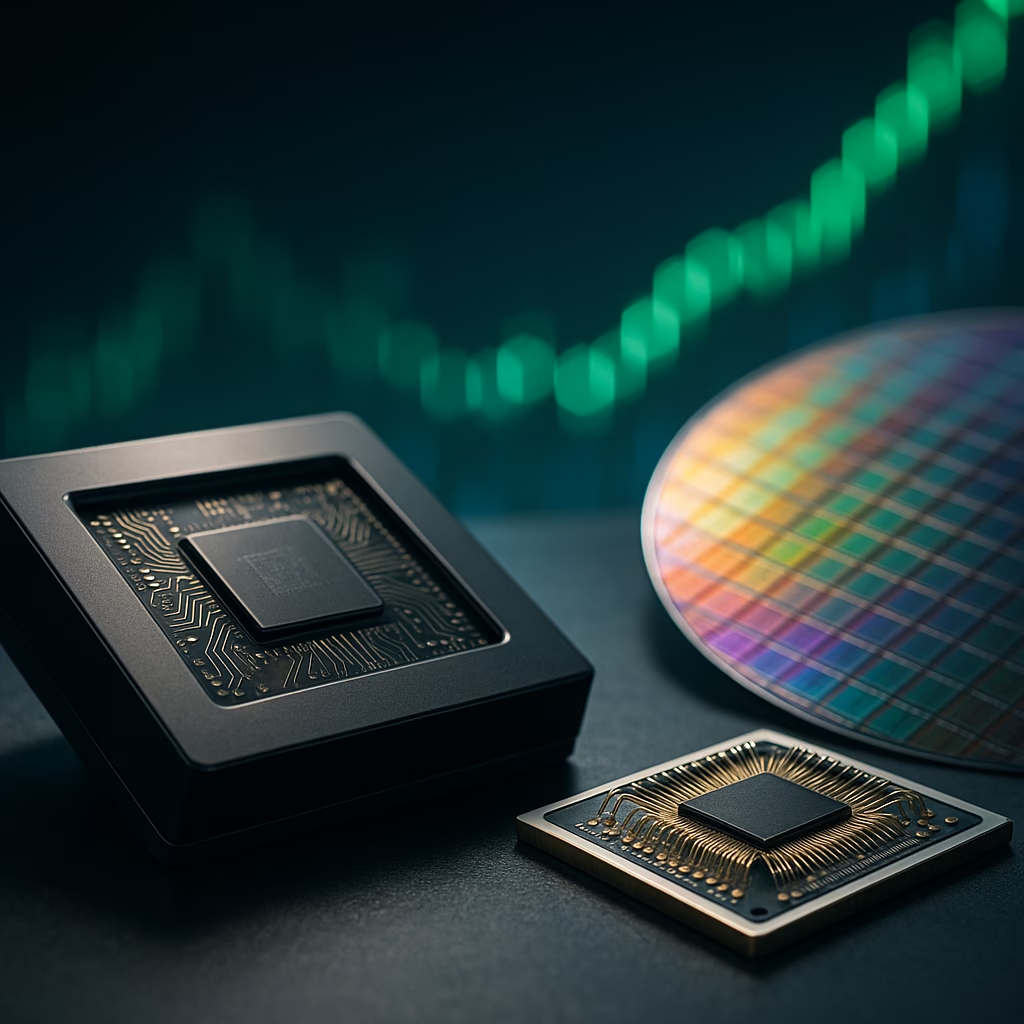
AI chip stocks surge as Nvidia, AMD and TSMC rally
AI-linked semiconductor shares moved higher as investors continued to rotate into companies most exposed to the rapid buildout of artificial intelligence infrastructure. The rally spotlighted three names at the heart of the AI hardware supply chain: Nvidia, AMD, and Taiwan Semiconductor Manufacturing Company (TSMC). Together, they represent the core “compute stack” powering modern AI—designing advanced chips, supplying accelerators, and manufacturing leading-edge silicon at scale.
Market enthusiasm around AI chips has been anchored in a simple idea: as generative AI models grow larger and more capable, the demand for data-center compute rises with them. That compute is increasingly delivered by specialized processors—GPUs and other accelerators—rather than traditional CPUs alone. This shift has helped propel AI-chip leaders and the companies that manufacture their designs.
Why chipmakers are gaining: the AI infrastructure cycle
AI spending is increasingly being treated as an infrastructure cycle, similar to earlier waves like cloud computing and mobile. Hyperscalers and enterprise buyers are investing in servers, networking, memory, and power systems to support training and inference workloads. In that context, the latest market move reflects renewed confidence that AI-related capital expenditure will remain durable, even as investors keep a close eye on interest rates, inflation, and the broader economic backdrop.
Semiconductors are also highly sensitive to expectations. When investors believe demand is accelerating, chip stocks can rise quickly because:
- Supply is constrained at the most advanced manufacturing nodes, making leading capacity more valuable.
- Margins can expand for differentiated products with strong pricing power.
- Visibility improves when large customers commit to multi-quarter buildouts.
Nvidia: the bellwether for AI acceleration
Nvidia has become the market’s primary proxy for AI compute. Its GPUs and software ecosystem are widely used to train and run large language models and other generative AI systems. When Nvidia shares rise, it often signals broader confidence in AI demand and data-center spending. Investors track the company not only for unit shipments, but also for indicators such as product mix, availability of high-end accelerators, and the pace at which customers deploy new clusters.
Beyond raw performance, Nvidia’s strength has been its platform approach—hardware paired with a large software and developer ecosystem. That has reinforced the perception that the company is positioned to benefit as AI expands from research labs into mainstream enterprise workflows.
AMD: growing competition in data-center AI
AMD has been increasingly viewed as a credible challenger in AI accelerators and high-performance data-center computing. While Nvidia remains the dominant force in AI GPUs, AMD’s strategy is to win share by offering competitive performance, strong integration with server platforms, and a roadmap that appeals to customers seeking supplier diversity.
In semiconductor markets, competition matters because it can broaden adoption. More viable options for AI compute can encourage additional deployments—especially among enterprises balancing cost, availability, and long-term procurement planning.
TSMC: the manufacturing backbone of advanced AI chips
TSMC sits at a critical chokepoint in the global chip ecosystem. Many of the world’s most advanced processors—particularly those used in AI data centers—depend on leading-edge manufacturing technology that only a small number of foundries can deliver at volume. As AI accelerators push the limits of performance and efficiency, access to cutting-edge process nodes and advanced packaging becomes increasingly important.
Investors often treat TSMC as a “picks-and-shovels” play on AI: even when chip designers compete, demand for advanced manufacturing capacity and packaging can remain strong across the sector.
What investors are watching next
The AI chip rally also reflects a broader market narrative: technology earnings and forward guidance are driving sentiment, while macroeconomic uncertainty remains. In the near term, investors typically focus on several signposts:
- Data-center spending trends from cloud providers and large enterprises.
- Supply chain capacity, including advanced packaging availability and lead times.
- Regulatory and trade developments that could affect global chip sales and manufacturing.
- Energy and infrastructure constraints, since AI data centers require significant power and cooling.
Conclusion: AI chips remain the market’s key growth narrative
The surge in AI chip stocks highlights how central semiconductors have become to the current technology cycle. Nvidia and AMD represent the competitive frontier of AI acceleration, while TSMC underpins the entire ecosystem through advanced manufacturing. As long as AI adoption continues to expand across industries, the market is likely to keep rewarding companies positioned to supply the compute layer—though volatility will remain as investors weigh valuations, capacity, and the pace of real-world AI deployment.
Reference Sources
AI chip stocks surge as Nvidia, AMD and Taiwan Semiconductor rally (ITP.net)






Leave a Reply