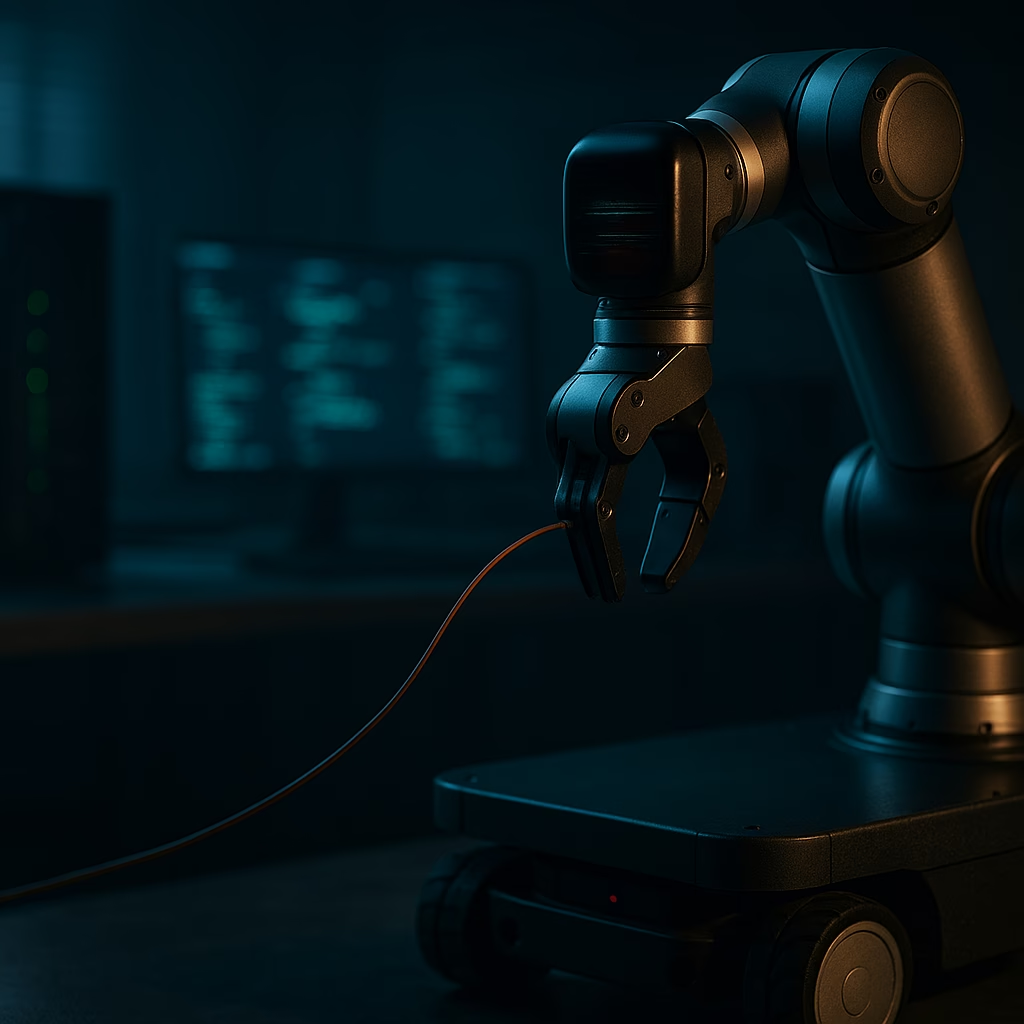
Critical NVIDIA Isaac Vulnerabilities Expose Robots to Remote Attacks
Robotics is moving from controlled lab environments into warehouses, hospitals, factories, and public spaces—and that shift makes cybersecurity a physical safety issue, not just an IT concern. Recent disclosures involving NVIDIA Isaac, a popular robotics development platform, highlight how weaknesses in software components can become real-world attack paths when robots are network-connected and deployed at scale.
The reported issues center on how robotics stacks often combine multiple services—web interfaces, middleware, containerized workloads, and machine-learning pipelines—into one integrated system. When any part of that system is misconfigured or vulnerable, attackers may be able to reach sensitive functions remotely. In practical terms, that could mean unauthorized access to robot management consoles, manipulation of data flows, or disruption of operations.
Why NVIDIA Isaac matters in modern robotics
NVIDIA Isaac is widely used because it accelerates robotics development with simulation, perception, and AI tooling. The platform fits an industry trend: companies are under pressure to automate amid labor shortages, rising logistics costs, and the need for faster fulfillment. As a result, more organizations are deploying fleets of robots and autonomous systems—often connected to corporate networks and cloud services for monitoring, updates, and analytics.
This connectivity is also the core risk. Robots are cyber-physical systems: a software compromise can have consequences that extend beyond data theft into downtime, damaged equipment, or safety hazards. The vulnerabilities described in the source reporting underscore a broader point: as robotics becomes mainstream, the attack surface grows rapidly, especially when platforms rely on complex dependency chains and web-accessible services.
What the vulnerabilities could enable
Based on the disclosed findings, the risk is not theoretical. Vulnerabilities in robotics platforms can be exploited in ways that commonly include:
- Remote access to exposed services if management interfaces or APIs are reachable from untrusted networks.
- Privilege escalation where an initial foothold leads to higher-level control over the host system or robot workloads.
- Service disruption (DoS) that can halt operations in environments like warehouses or production floors.
- Manipulation of robotic workflows, potentially affecting navigation, task execution, or sensor-driven decisions depending on how the system is integrated.
Importantly, many robotics deployments aren’t “single devices.” They are ecosystems: a robot, a control station, telemetry pipelines, update mechanisms, and sometimes orchestration platforms. That’s why a vulnerability in one component can cascade into broader compromise.
Industry context: why robot security is becoming urgent
Historically, industrial robots were often isolated on segmented networks with minimal internet exposure. Today’s autonomous mobile robots (AMRs), collaborative robots (cobots), and vision-driven systems are different: they depend on frequent software updates, remote diagnostics, and cloud-connected AI models. This mirrors what happened in IoT over the last decade—rapid adoption first, security hardening later.
From an economic perspective, automation is tied to competitiveness. Downtime in logistics or manufacturing has measurable cost: missed shipments, stalled production schedules, and SLA penalties. That creates strong incentives for organizations to treat robotics security as part of business continuity planning, not merely compliance.
Who should be concerned
The organizations most exposed are those running robots in environments where:
- Robotics services are reachable from enterprise networks without strict segmentation.
- Default configurations, weak authentication, or broad firewall rules are present.
- Third-party integrations connect robots to broader operational technology (OT) systems.
- Patch cycles are slow due to uptime requirements or vendor coordination delays.
Even teams using Isaac primarily for development should pay attention, because development environments often reuse configs and container images that later get promoted into production.
Practical mitigation steps to reduce risk
While vendor patches and advisories are the first stop, security teams can reduce exposure with standard hardening practices adapted to robotics:
- Apply updates promptly for NVIDIA components and any bundled dependencies in the robotics stack.
- Restrict network exposure: keep robot management interfaces off the public internet and behind VPN or Zero Trust access controls.
- Segment robotics networks from general IT networks and enforce least-privilege communications.
- Monitor for anomalous behavior such as unexpected outbound connections, new containers, or unusual API calls.
- Harden credentials with strong authentication, rotated secrets, and removal of defaults.
Conclusion: robotics security is now operational security
The disclosure of critical NVIDIA Isaac vulnerabilities is a timely reminder that the robotics boom comes with new security obligations. As robots become essential infrastructure for modern operations, protecting robotics platforms must be treated like protecting production systems: patch quickly, minimize exposure, segment networks, and monitor continuously. The organizations that do this well will not only reduce cyber risk—they’ll also protect uptime, safety, and long-term trust in automation.
Reference Sources
CyberPress — Critical NVIDIA Isaac Vulnerabilities Expose Robots to Remote Attacks
NVIDIA Product Security — Security Notices






Leave a Reply