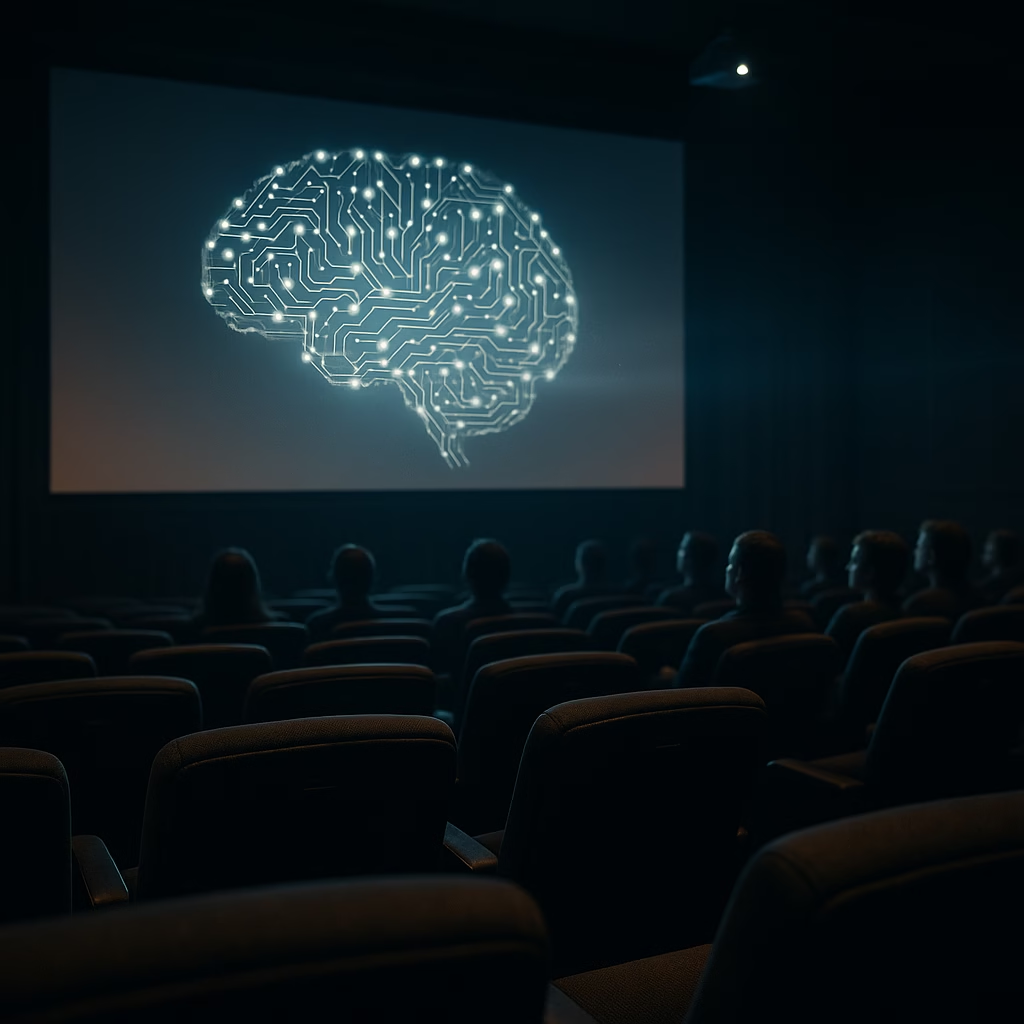
How Charlie Brooker’s AI Cinema Vision Could Save Movie Theaters
When Charlie Brooker talks about the future of movies, the entertainment industry tends to listen. The creator of Black Mirror has spent more than a decade dissecting our relationship with technology, and now he is turning that lens on AI-generated cinema — not as a gimmick, but as a possible lifeline for struggling theaters.
In a recent conversation highlighted by Deadline, Brooker explored how tools like OpenAI’s Sora could reshape Hollywood, Disney-sized studios, and the traditional theatrical experience. His comments arrive at a moment when the film business is still recalibrating from the pandemic, inflation trends, and shifting consumer habits — and when AI market growth is reshaping every corner of the creative economy.
Theaters in Trouble: Why the Old Model Is Cracking
For years, the warning signs have been clear. Even before COVID-19, movie theaters were fighting:
- Streaming competition from platforms like Netflix, Disney+, and Amazon Prime Video
- Rising production and marketing costs that pushed studios toward “safe” blockbuster franchises
- Shifts in audience behavior, with more people waiting for at-home releases
The pandemic accelerated these pressures. Long closures, safety restrictions, and economic uncertainty changed habits at scale. Many viewers who upgraded their home setups — bigger TVs, sound systems, and faster internet — now treat their living rooms as their default movie venue. Even as box office numbers recover, they remain volatile, tied closely to a few massive tentpoles or nostalgic IP.
In that context, the economic outlook for mid-budget, original films in theaters has grown increasingly fragile. Theatrical windows have shortened, risk tolerance has shrunk, and studios lean heavily on proven brands. This is the backdrop for Brooker’s interest in how AI cinema might actually expand, rather than shrink, creative possibilities.
Charlie Brooker, AI, and the Black Mirror of Cinema
Brooker is no stranger to imagining worst-case scenarios for technology. Black Mirror has tackled everything from social credit systems to deepfakes and algorithmic obsession, often years before those concepts became mainstream talking points. So when he entertains the idea of AI tools like Sora being part of cinema’s future, it carries a particular weight.
Sora — OpenAI’s video generation model — has become shorthand for the next leap in generative AI. Instead of just writing text or creating static images, these models can generate moving images and complex scenes from prompts. While the technology is still emerging and heavily debated, it suggests a world where:
- Filmmakers can iterate quickly on visual ideas without full-scale physical shoots
- Concept art, storyboards, and even rough animated sequences can be produced in days, not months
- Smaller teams can experiment with ambitious, visually rich storytelling
Brooker’s perspective, as reported, isn’t that AI should replace filmmakers. Rather, he sees AI as a new toolset that could lower barriers to experimentation — and, crucially, create fresh reasons for audiences to leave their homes and go to the cinema.
From Disney-Scale Spectacle to AI-Driven Variety
Theatrical exhibition today is dominated by a handful of players, with Disney often at the center thanks to Marvel, Star Wars, Pixar, and its live-action remakes. These films deliver reliable global box office and justify premium formats like IMAX and Dolby Cinema. However, this concentration also means that cinema schedules can feel repetitive, and riskier, original projects struggle to secure screens.
AI-assisted production, in Brooker’s vision, could introduce more variety and agility into what gets made and shown:
- Faster development cycles: Directors and writers could test ideas visually before major investments, making it easier to greenlight unconventional stories.
- Creative experimentation: Genres, visual styles, and narrative structures that would once be too costly might become viable.
- Expanded content formats: Theaters could program shorter works, interactive pieces, or limited-run experimental features produced with AI support.
Rather than only chasing the next billion-dollar franchise, studios and distributors could use AI to diversify offerings — supporting both large-scale Disney-style tentpoles and smaller, inventive projects that feel distinct from anything on streaming.
Why AI Cinema Might Actually Help Movie Theaters
Brooker’s most provocative suggestion is that AI could help rebuild the cultural value of going to the movies. Theatrical exhibition has always thrived when it offers something audiences cannot easily replicate at home: widescreen spectacle, communal reactions, and the sense of taking part in a shared cultural moment.
AI-enhanced cinema could support that in several ways:
- Unique, event-driven experiences: Limited AI-assisted films, one-off screenings, or live “AI-generated” components could turn showings into must-see events.
- Local and global experimentation: Smaller theaters or independent chains might curate AI-driven shorts or experimental features, creating distinct identities.
- Cost-flexible storytelling: If production costs for certain visual elements fall, more budget can go to human talent, marketing, and in-theater experiences.
As inflation trends and broader economic pressures shape consumer spending, audiences are becoming more selective about what they pay to see in theaters. Offering something truly different — not just another sequel — could be key to long-term box office resilience.
The Ethical and Creative Tension at the Heart of AI Film
None of this comes without risk, and Brooker’s body of work suggests he is acutely aware of the downsides. The rise of AI in entertainment has already sparked intense debate over:
- Protection of actors’ and writers’ rights and likenesses
- Data usage, training sets, and consent
- Job displacement and the future of creative labor
Any serious AI cinema ecosystem would need clear guardrails, strong union protections, and transparent policies. The recent Hollywood labor disputes have made it clear that creative workers want technology to be a tool, not a replacement.
Brooker’s framing implicitly recognizes this: AI is most interesting when it amplifies human imagination, not when it tries to automate it away. In that balance — between efficiency and originality, between automation and artistry — lies the real test of whether AI can revitalize theaters or simply accelerate existing problems.
A Future Where Theaters Matter Again
As AI market growth continues and tools like Sora evolve, the film industry faces a strategic choice. It can treat AI purely as a cost-cutting mechanism, risking generic content and deeper audience fatigue. Or it can embrace AI as a catalyst for new cinematic forms that bring surprise, experimentation, and diversity back to the big screen.
Charlie Brooker’s vision points to the latter path: a future where AI is part of a creative toolkit that makes theaters more relevant, not less. If studios, artists, and exhibitors can align around that idea — while protecting human creativity at the core — movie theaters might not just survive the next decade. They might finally evolve into something audiences have been quietly wanting all along: a place to see things they truly cannot get anywhere else.
Reference Sources
Deadline – Charlie Brooker On AI, Sora And How Cinema Might Survive




Leave a Reply