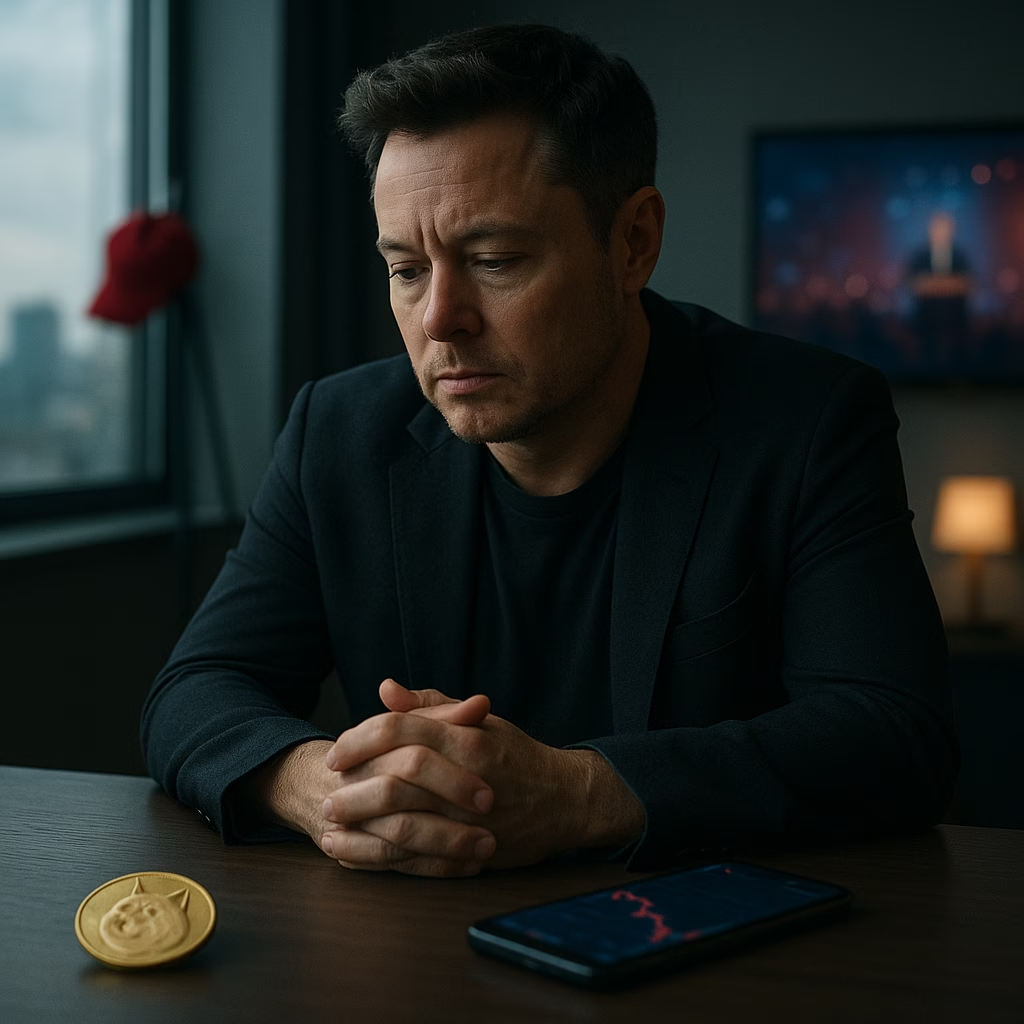
Elon Musk’s latest public reflections mark a rare moment of contrition from one of the tech world’s most influential and controversial figures. In a wide-ranging conversation, the Tesla and SpaceX chief executive acknowledged that his past cheerleading for Dogecoin and his high-profile alliance with Donald Trump had consequences he now views more critically — for markets, politics, and the broader debate over AI regulation.
Elon Musk’s uneasy legacy with meme coins and political power
Dogecoin hype and the reality of crypto market volatility
Musk has long been intertwined with the rise of Dogecoin, the meme cryptocurrency that surged from an internet joke to a speculative asset class. His tweets, TV appearances, and occasional jokes about Doge helped fuel dramatic price swings, inspiring retail traders while alarming regulators and economists watching broader crypto volatility and its impact on small investors.
In his recent comments, Musk conceded that his public enthusiasm for Dogecoin may have gone too far. While he stopped short of a full apology, he acknowledged that his influence — amplified by tens of millions of followers — played a role in pushing a highly speculative token into the mainstream. For many latecomers who bought in near the top, the subsequent downturn in crypto markets, coinciding with tighter monetary policy and shifting inflation trends, translated into real financial losses.
Dogecoin’s trajectory became emblematic of a broader era of risk-on investing, in which ultra-low interest rates, stimulus-driven liquidity, and the rapid rise of trading apps encouraged retail speculation. Musk’s admission reflects a growing recognition in tech and finance that viral enthusiasm, when combined with celebrity endorsements, can distort price discovery and destabilize markets already sensitive to changing economic outlook signals from central banks.
A complicated partnership: Musk, Trump, and political backlash
Equally striking was Musk’s willingness to reassess his alliance with Donald Trump. Once viewed as a pragmatic partnership between a populist president and a charismatic tech billionaire, their relationship became a flashpoint for criticism from both political and corporate circles. Musk’s access to Trump and participation in advisory roles were often framed as attempts to influence policy on regulation, infrastructure, and the future of American manufacturing.
Over time, however, aligning himself too closely with Trump exposed Musk to reputational risk. As US politics grew more polarized, his perceived proximity to the former president alienated some customers, investors, and employees, especially in the context of increasingly charged debates over climate policy, social media moderation, and democratic norms.
Musk’s recent remarks suggest he underestimated the long-term costs of that association. While he has historically framed his political engagement as issue-based rather than partisan, he now appears more attuned to how such alliances can reshape public trust in his companies and his role in shaping technology policy.
AI, free speech, and the regulatory crossroads
Beyond crypto and politics, Musk used the occasion to revisit his warnings about advanced artificial intelligence. Long before the current boom in AI market growth, he was one of the most vocal figures calling for guardrails on powerful AI systems. His stance helped catalyze a broader global conversation on AI safety, even as he simultaneously backed or launched AI ventures of his own.
In reflecting on his past choices, Musk linked his Dogecoin and Trump episodes to a wider theme: the outsized influence of tech leaders over public discourse and policy. The same social platforms that amplified meme coins and partisan politics are now central to the spread of AI-generated content, raising questions about misinformation, election integrity, and the need for credible oversight.
Regulators around the world are now moving from talk to action, debating frameworks for AI governance, data protection, and platform accountability. Musk’s mixed record — oscillating between libertarian rhetoric about “free speech” and urgent calls to restrain dangerous AI — highlights the tension between innovation, profit, and public responsibility in a period of rapid technological change.
A cautionary tale about influence and accountability
Musk’s reflections can be read as a case study in the limits of personal branding in an era of hyper-financialized markets and real-time social media feedback loops. A single tweet from a high-profile CEO can move asset prices, shape investor sentiment, or tilt the news cycle — but those same posts can also invite regulatory scrutiny and erode confidence when markets reverse or political winds shift.
His comments underscore several broader dynamics:
- Market sensitivity to personality-driven signals: Retail investors, already navigating uncertainty around interest rates and shifting economic outlook forecasts, can be especially vulnerable to hype from celebrity figures.
- Reputational risk in polarized politics: Aligning with any single political figure, particularly one as divisive as Trump, can complicate a company’s relationship with global regulators, partners, and consumers.
- Growing demand for tech accountability: As AI, social platforms, and crypto assets become more embedded in daily life, calls for clear rules and transparent governance are intensifying.
For Musk, acknowledging regret is not the same as disowning his past. He continues to champion bold bets on electric vehicles, reusable rockets, brain–computer interfaces, and AI. But his recent remarks suggest a greater awareness that the intangible asset of trust — among users, regulators, and markets — may be as critical to long-term success as any breakthrough in engineering.
In a climate defined by uncertain inflation trends, rapid AI market growth, and shifting geopolitical alliances, Musk’s reassessment serves as a reminder that technological ambition cannot be separated from social responsibility. The question now is whether this moment of introspection will meaningfully change how he uses his voice — and how the public weighs his next big bet.
Reference Sources
The Guardian – Elon Musk admits regret over Dogecoin hype and Trump alliance





Leave a Reply