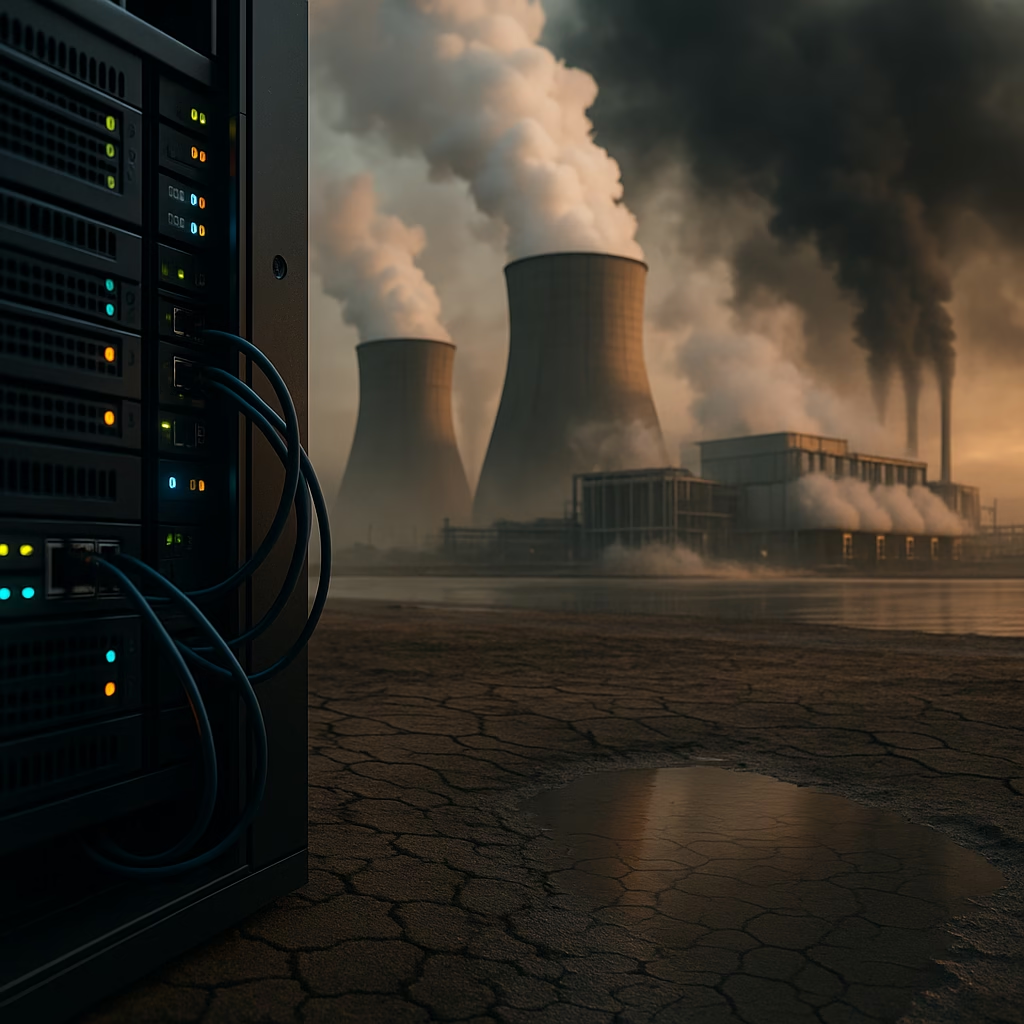
The rapid AI boom of 2025 reshaped global technology and financial markets — but new research shows it also carried a steep environmental price. Behind the explosion of generative AI tools and large language models lies an intensive use of electricity, water, and hardware that has driven a sharp rise in CO2 emissions and strained local water resources.
As businesses raced to integrate AI into everything from customer service to financial forecasting and logistics, the sector’s carbon and water footprint expanded far faster than most policymakers anticipated. The findings add a new dimension to debates about AI regulation, climate targets, and the long‑term sustainability of the digital economy.
How the 2025 AI Boom Supercharged Energy Demand
Training and running state-of-the-art AI systems requires enormous computational power. In 2025, the surge in demand for AI data centers coincided with strong AI market growth and a global race to deploy larger and more capable models. This research underscores how that race translated into a surge in energy consumption, locking in higher emissions in regions still heavily dependent on fossil fuels.
Key drivers of this spike include:
- Massive AI model training: Training large language models and image generators requires running thousands of high-end chips for weeks or months, drawing on significant electricity supplies.
- Everyday AI usage at scale: Once deployed, these models power search, chatbots, code assistants, and recommendation engines used by hundreds of millions of people daily. In aggregate, this “inference” phase can consume more energy than training.
- Hardware expansion: Cloud providers and big tech firms accelerated investment in GPU clusters, new data centers, and networking infrastructure, further increasing baseline power needs.
In economies where the grid is still dominated by coal and gas, this additional demand directly translates into higher CO2 emissions. Researchers highlight that, despite corporate pledges on net zero and green energy, the pace of AI deployment in 2025 outstripped the availability of clean power in many regions.
The Hidden Water Footprint of AI
Beyond emissions, the study draws attention to another often-overlooked resource: water. Data centers must keep servers cool to avoid overheating, and many facilities rely on water-intensive cooling systems. As AI workloads intensified in 2025, so did water consumption.
According to the research, the AI boom amplified several existing tensions:
- Local water stress: Some AI data centers are located in areas already facing drought risk or competing water demands from agriculture and households.
- Thermal pollution: When water is used for cooling and discharged back into rivers or lakes at higher temperatures, it can affect local ecosystems.
- Lack of transparency: Detailed data on water usage by specific AI services is rarely disclosed, making it difficult for communities and regulators to assess the true impact.
Researchers warn that as AI becomes more deeply embedded in everyday products, the industry’s water use could become a critical factor in regional planning and climate adaptation strategies.
AI, Climate Targets, and the Global Economic Outlook
The environmental impact of the 2025 AI surge raises difficult questions for governments trying to reconcile economic growth, technological leadership, and climate commitments. While AI is often promoted as a tool to enhance productivity, optimize energy grids, and support climate modelling, the infrastructure behind it can undermine national and corporate climate goals if left unchecked.
In the context of broader economic outlook debates, the research suggests that:
- Unchecked AI expansion could complicate efforts to meet net-zero emissions targets.
- Energy and water constraints may become a limiting factor for AI adoption in certain regions.
- Future inflation trends in energy and water-intensive sectors could be influenced by rising AI-related demand for these resources.
This tension mirrors earlier phases of the digital revolution, when the rapid growth of the internet and cloud computing outpaced environmental planning, leaving regulators to catch up after the fact.
Can “Green AI” Catch Up?
The report does not argue that AI should be abandoned. Instead, it stresses that the sector must move faster to align with climate and resource constraints. Several strategies are already being discussed within industry and policy circles:
- Energy-efficient model design: Prioritizing smaller, more efficient models for routine tasks, and reserving the largest models for cases where they are genuinely needed.
- Clean energy procurement: Accelerating investment in renewable energy to power AI data centers and linking AI expansion to verifiable increases in green capacity.
- Hardware and cooling innovation: Improving chip efficiency, using advanced cooling methods, and siting data centers in cooler climates or near renewable resources.
- Transparency and reporting: Standardizing how companies report AI-related emissions and water use, enabling regulators, investors, and the public to scrutinize environmental claims.
Without such measures, the research suggests that the environmental costs of AI could erode the social license for further expansion, potentially triggering tighter regulation and public pushback.
Rebalancing the AI Narrative
For much of 2025, the public conversation around AI focused on innovation, competition, and the potential impact on jobs and productivity. This new analysis adds a crucial layer to that narrative: the true cost of AI is not only measured in investment figures or stock valuations but also in tons of carbon and billions of liters of water.
As policymakers revisit AI regulation frameworks and companies refine their AI strategies, the findings underline the need to integrate environmental metrics into every stage of AI deployment. In a world already grappling with climate risk, water scarcity, and volatile energy markets, the sustainability of AI is no longer a side issue — it is central to the technology’s long-term role in the global economy.
Reference Sources
The Guardian – 2025 AI boom drove huge CO2 emissions and water use, research finds






Leave a Reply