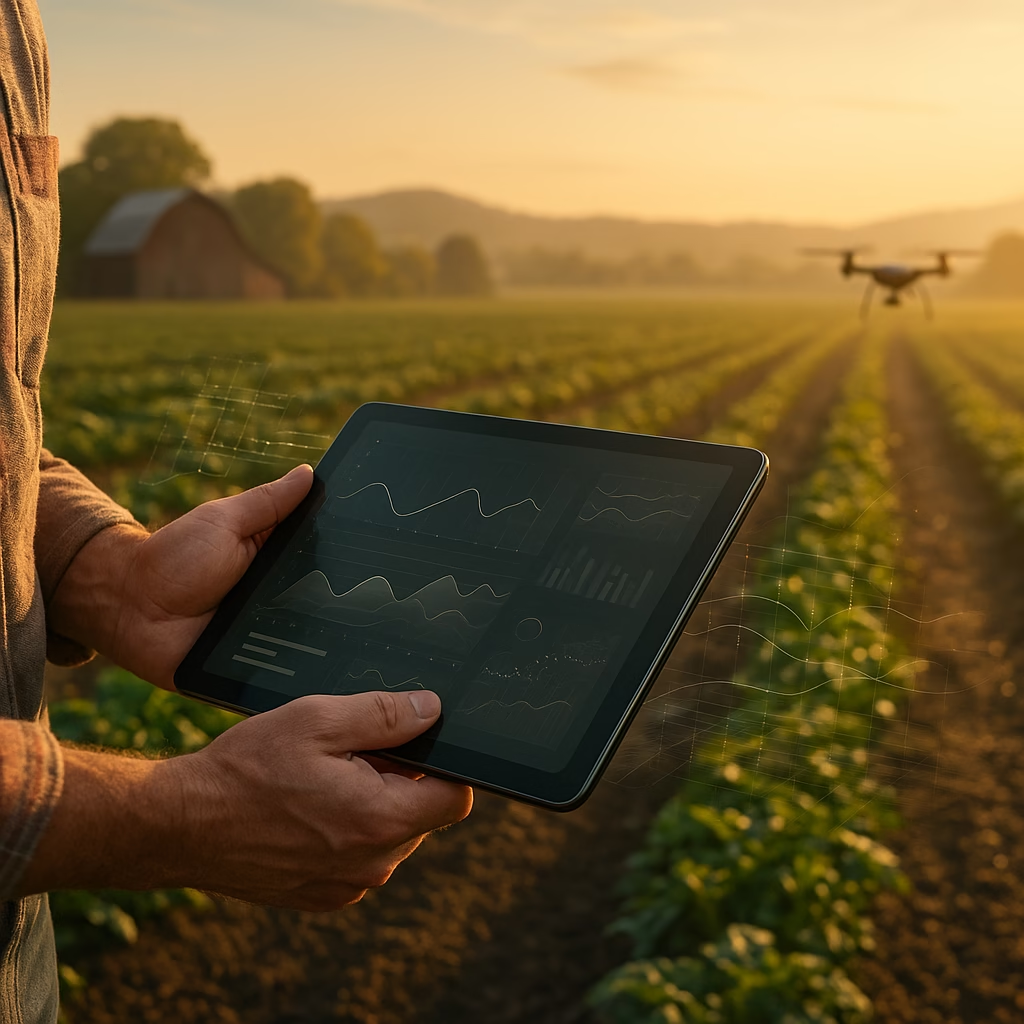
NC Agricultural Analytics Platform Enables Smarter Data-Driven Farming Decisions
Across U.S. agriculture, the pressure to produce more with fewer resources keeps rising. Input costs fluctuate, weather volatility increases risk, and margins can tighten quickly when fuel, fertilizer, seed, and labor costs move in the wrong direction. In that environment, data-driven decision-making has shifted from a “nice-to-have” to a practical requirement—especially for growers and agribusinesses trying to make timely, defensible choices.
In North Carolina, a statewide agricultural analytics effort is helping turn that goal into something more actionable: a platform designed to bring together data, tools, and expertise so farmers and advisors can evaluate options with clearer evidence. Rather than asking producers to piece together spreadsheets, device outputs, and disconnected dashboards, the initiative aims to support decisions with more unified analytics and easier access to insights.
Why analytics platforms matter in modern agriculture
Precision agriculture has evolved rapidly over the last two decades—from GPS guidance and yield monitors to variable-rate applications and remote sensing. Yet many operations still face a familiar challenge: data exists, but it isn’t always usable. Files may be stored in different formats, spread across vendors, or locked behind tools that don’t integrate well.
A centralized analytics platform can help by:
- Organizing and standardizing agronomic, operational, and environmental datasets
- Making analysis easier for non-technical users through clearer interfaces and workflows
- Supporting comparisons across fields, seasons, and management zones
- Improving confidence in decisions such as seeding rates, nitrogen timing, irrigation scheduling, or variety selection
For many farms, the economic value comes down to reducing waste and avoiding preventable yield loss. When decisions are backed by measurable outcomes—rather than intuition alone—operations can prioritize the practices that return the most value per acre.
What the North Carolina effort is designed to support
The North Carolina agricultural analytics platform highlighted by Precision Farming Dealer focuses on enabling broader access to analytical capabilities that can help inform on-farm management. The goal is not simply “more data,” but better decision support—tools and resources that help convert raw information into practical recommendations.
In practice, platforms like this typically support several layers of agriculture analytics:
- Field-level performance tracking (yield history, trial comparisons, response to treatments)
- Soil and nutrient strategy (soil test interpretation, variable-rate planning, nutrient efficiency)
- Weather and risk context (seasonal patterns, rainfall variability, heat stress windows)
- Operational benchmarking (cost awareness tied to agronomic outcomes)
By aligning data tools with real agronomic questions, the platform helps narrow the gap between “collecting information” and “using information.” This is particularly important for diversified production systems where multiple crops, soil types, and management practices can make decision-making more complex.
Industry trends pushing adoption
The push toward analytics is reinforced by several widely recognized trends in agriculture:
- Input price volatility: Fertilizer and fuel costs can swing sharply, making efficiency and timing more valuable.
- Labor constraints: With fewer skilled operators available, decision support tools can help teams prioritize tasks and reduce rework.
- Climate variability: More frequent extremes increase the value of scenario planning and adaptive management.
- Technology proliferation: More sensors and platforms mean more data—raising the importance of integration and interpretation.
Over time, agriculture has followed a familiar pattern seen in other industries: once data becomes abundant, the competitive edge shifts to those who can analyze it quickly and apply it consistently.
What “data-driven” looks like on the farm
Data-driven farming doesn’t require turning every decision into a complicated model. Often, it means building repeatable processes for testing and learning. For example, a farm might use analytics to:
- Compare hybrid/variety performance across soil types and planting windows
- Evaluate whether variable-rate inputs improved profitability—not just yield
- Identify low-performing zones that may need drainage, lime, or different management
- Track outcomes from conservation practices tied to soil health and water management
When a platform supports these workflows, it can help growers move from anecdotal observations to measurable results—and make adjustments faster the next season.
Conclusion: turning information into better outcomes
As agriculture becomes more complex, analytics platforms that translate data into decisions can play a central role in improving productivity, resilience, and profitability. North Carolina’s agricultural analytics initiative reflects a broader shift: farmers and advisors want tools that reduce uncertainty, support smarter input use, and make it easier to learn from every acre. The long-term payoff is simple but powerful—better decisions, made faster, with clearer evidence behind them.
Reference Sources
Precision Farming Dealer – NC Agricultural Analytics Platform Supports Data-Driven Farming
USDA NASS – National Agricultural Statistics Service
International Society of Precision Agriculture (ISPA)
USDA NRCS – Natural Resources Conservation Service






Leave a Reply