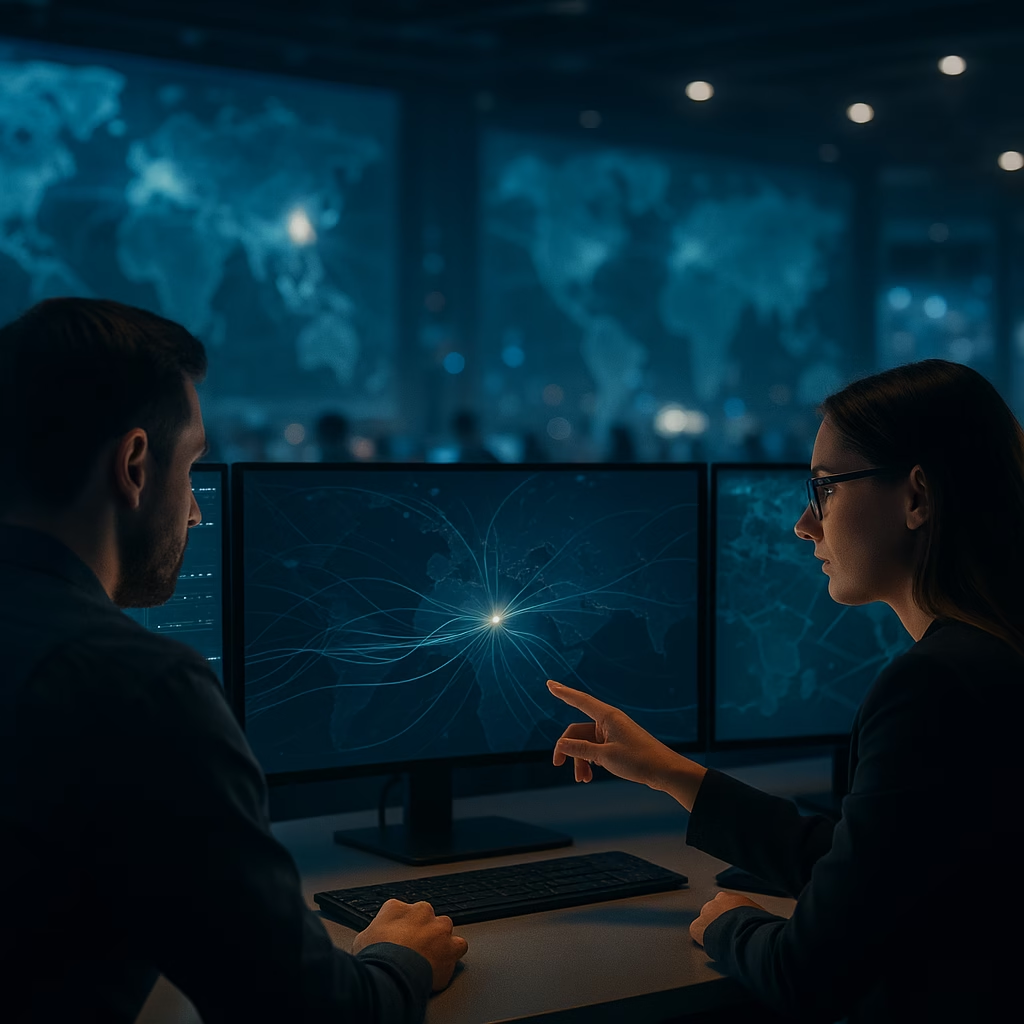
ReSecurity Unveils AI Cyber Threat Intelligence Solutions at Milipol Paris
At Milipol Paris 2025, one of the world’s leading events for homeland security and safety, ReSecurity showcased its latest generation of AI-powered Cyber Threat Intelligence (CTI) technologies. The company’s presence underscored how artificial intelligence is rapidly transforming the way governments, law enforcement agencies, and critical infrastructure operators detect, analyze, and respond to cyber threats.
Milipol Paris: A Global Stage for Security Innovation
Held biennially, Milipol Paris brings together security professionals, technology providers, policymakers, and law enforcement agencies from around the globe. The event is widely regarded as a barometer of where the public safety and homeland security sectors are heading.
In recent years, cyber risk has moved from a niche IT concern to a core national security priority. As more critical services—from energy grids to healthcare systems—are digitized, the attack surface grows. This shift has made cyber threat intelligence a central topic at Milipol, with governments increasingly looking for solutions that enable them to anticipate attacks instead of merely reacting to them.
AI-Driven Cyber Threat Intelligence at the Center
ReSecurity used the Milipol platform to demonstrate how artificial intelligence and machine learning can supercharge threat intelligence operations. Traditional CTI relies heavily on manual analysis and static indicators, which often struggle to keep pace with fast-evolving threat actors. AI changes this dynamic by enabling:
- Real-time analysis of massive data streams from open sources, dark web forums, malware samples, and network telemetry.
- Automated pattern recognition that can detect suspicious behavior, emerging campaigns, and new tools used by cybercriminals and state-sponsored groups.
- Proactive risk scoring of entities, infrastructure, and digital assets, helping security teams prioritize what matters most.
By combining AI models with human-led expertise, ReSecurity’s CTI platforms aim to give security operations centers (SOCs) and investigative units a clearer, earlier view of emerging threats, including those targeting critical infrastructure, government networks, and law enforcement systems.
Key Capabilities Demonstrated at the Event
At Milipol Paris, ReSecurity showcased a suite of solutions designed for organizations that need high-fidelity, actionable intelligence rather than raw data. While the exact technical specifications may vary across products and deployments, the core capabilities highlighted included:
- Threat Actor Tracking & Profiling – Tools that help identify and track threat groups across open, deep, and dark web environments, mapping their tactics, techniques, and procedures (TTPs).
- Dark Web Monitoring – Continuous surveillance of underground markets, forums, and encrypted channels where stolen data, access credentials, and malware are traded.
- Digital Risk Protection – Monitoring for brand impersonation, data leaks, fraudulent domains, and other risks that impact public institutions and private organizations.
- Incident Investigation Support – Enriched intelligence feeds and contextual data to support forensic investigations, case-building, and cross-border cooperation.
- Integration with Existing Security Stacks – APIs and connectors that allow CTI data to flow into SIEM, SOAR, and endpoint platforms to automate detection and response workflows.
These capabilities are particularly valuable for agencies responsible for national security, border protection, counter-terrorism, and financial crime enforcement, where early warning and accurate attribution can significantly reduce the impact of cyber incidents.
Why AI-Powered CTI Matters Now
The timing of ReSecurity’s showcase aligns with broader trends in the global cybersecurity landscape:
- Escalating Cybercrime Economy – The cybercrime market is estimated in the trillions of dollars annually, driven by ransomware, data theft, and fraud-as-a-service models. Criminals increasingly operate like professional organizations, using sophisticated tools and outsourcing capabilities.
- Hybrid Threats and Geopolitics – Cyber operations have become a staple of geopolitical competition. States and affiliated groups leverage cyber tools for espionage, disruption, and influence operations, often targeting critical public services.
- AI Used by Attackers – Adversaries are also adopting AI to automate phishing, evade detection, and generate malicious content. Defenders therefore require AI-enhanced visibility to keep pace.
- Regulatory and Policy Pressure – Governments across Europe, North America, and Asia are tightening regulations around cyber resilience, incident reporting, and critical infrastructure protection, pushing agencies and enterprises to invest in more advanced intelligence capabilities.
Against this backdrop, AI-driven CTI is increasingly seen as an essential layer in modern security architectures. It provides the strategic context necessary to move from reactive defense to anticipatory security, where organizations can identify threats before they fully materialize.
Supporting Law Enforcement and Homeland Security
ReSecurity’s presence at Milipol Paris highlighted its focus on working with law enforcement, national security agencies, and public sector organizations. These stakeholders often face unique challenges:
- Managing sensitive investigations that cross national borders and legal frameworks.
- Handling large volumes of digital evidence from multiple platforms and data sources.
- Responding to threats that blend cybercrime, terrorism, and organized crime.
AI-powered CTI can assist by uncovering links between online personas, infrastructure, and real-world entities; identifying early signals of planned attacks; and supporting more coordinated international responses. For many agencies, these tools help bridge the gap between intelligence gathering and
Looking Ahead: AI as a Strategic Asset in Cyber Defense
ReSecurity’s showcase at Milipol Paris 2025 reflects a broader industry recognition: AI is no longer optional in cyber defense. As threats grow in volume, speed, and sophistication, organizations that rely solely on manual analysis or legacy tools risk being overwhelmed.
By embedding AI into CTI workflows, security teams can:
- Gain earlier visibility into emerging attack campaigns.
- Prioritize resources based on risk and impact.
- Improve collaboration between public and private sectors.
- Strengthen overall resilience of critical national infrastructure.
As governments and enterprises refine their cybersecurity strategies in the coming years, partnerships with specialized intelligence providers like ReSecurity—and the adoption of AI-augmented CTI platforms—are likely to become a central pillar of national and organizational defense.
Milipol Paris 2025 thus served not only as a showcase of new technology, but as a clear signal that the future of homeland security will be defined by how effectively institutions harness data, intelligence, and AI to stay ahead of rapidly evolving cyber threats.
Reference Sources
Milipol Paris – Official Event Website
ReSecurity Showcases AI-Powered Cyber Threat Intelligence at Milipol Paris 2025 – ReSecurity





Leave a Reply