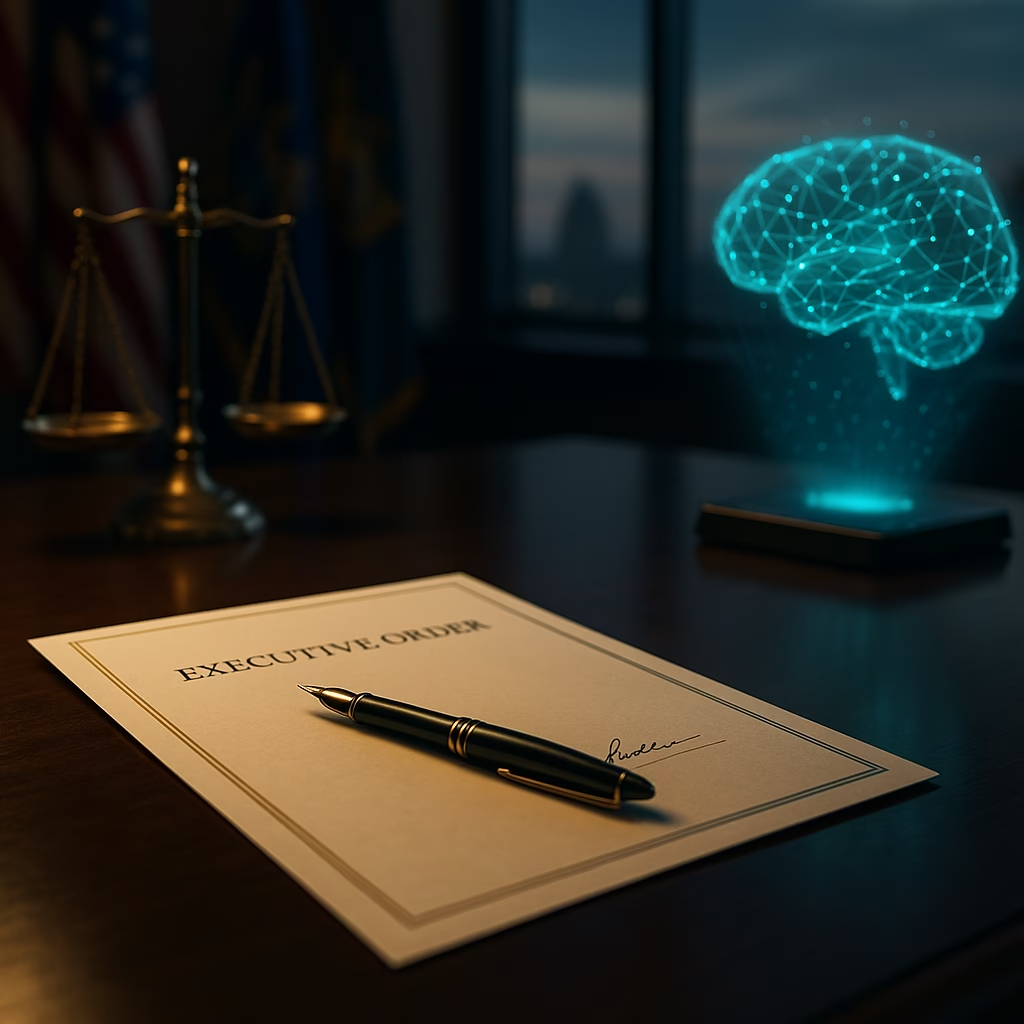
President Donald Trump has signed a new executive order on artificial intelligence regulation that aims to sharply limit the power of individual US states to set their own AI rules. The move escalates a growing national debate over who should govern rapidly advancing AI technologies — Washington or state governments — and how to address mounting AI safety, privacy, and economic risks.
Federal Power vs. State AI Laws
At the center of the order is an attempt to assert broad federal preemption over state and local AI regulations. The administration argues that a patchwork of state-level AI rules could create confusion for companies, slow AI market growth, and undermine US competitiveness in the global tech race.
Several states have recently moved ahead with their own AI-related legislation, targeting issues such as:
- AI-generated political ads and deepfakes used to mislead voters
- Use of AI in hiring, credit scoring, and housing decisions
- Data privacy protections as AI models consume massive datasets
- Accountability for biased or discriminatory AI systems
These efforts reflect growing concerns at the local level about how AI tools will shape jobs, elections, and civil rights. Trump’s order effectively tells those states to step back, asserting that the federal government should take the lead on setting nationwide AI standards.
AI Safety Concerns Are Rising — But So Is Regulatory Tension
The executive order comes at a time when public anxiety about AI is surging. Generative AI systems are now capable of producing convincing text, images, audio, and video, raising red flags around:
- Election integrity, especially as deepfake political content becomes easier to produce and spread
- Workforce disruption and the broader economic outlook as automation pressures white-collar and creative jobs
- Cybersecurity risks, including AI-augmented scams, phishing, and misinformation
- Reinforcing bias in critical areas such as policing, lending, and employment
States have argued that they are closer to voters and can move faster than Congress to respond to these threats. The Trump administration, by contrast, frames the issue as one of national economic strategy, saying that fragmented rules could weaken US companies in an increasingly competitive global AI race.
Industry Push for One National Rulebook
Major tech companies and AI developers have long favored a single national regulatory framework. They warn that dozens of different state rules could increase compliance costs and slow innovation just as AI becomes a central driver of productivity and GDP growth.
From their perspective, a unified federal standard could:
- Make it easier to roll out AI products nationwide
- Offer clear, consistent guidelines on liability and safety testing
- Support long-term investment planning amid uncertain AI regulation
However, consumer advocates and civil rights groups often counter that federal rules tend to be slower and more heavily influenced by lobbying, leaving gaps in protection. For them, state AI laws can act as a crucial backstop — similar to how states have historically led on issues like data privacy, environmental standards, and consumer protection.
What the Order Signals About US AI Strategy
Trump’s order underscores how central AI has become to America’s broader economic outlook and geopolitical strategy. Policymakers now routinely describe AI as a foundational technology that will shape:
- Global supply chains and productivity trends
- Military and national security capabilities
- Long-run inflation trends through automation and cost reductions
- Competitiveness with China and the European Union, both of which are rolling out their own AI regulations
By trying to rein in state-level initiatives, the administration is betting that a more centralized approach will position the US more effectively in this international race — even as it risks a political backlash from governors, state legislatures, and local regulators who see AI’s impacts playing out in their own communities.
Legal and Political Fights Are Inevitable
The order is likely to face swift legal challenges. States that have already passed AI-related laws — particularly around elections and consumer protection — may argue that the federal government is overstepping and infringing on their traditional powers.
Key questions that courts and lawmakers may soon confront include:
- How far can the federal government go in blocking state efforts to regulate AI?
- Can Washington claim exclusive authority over AI under interstate commerce or national security justifications?
- What happens to existing state AI rules that conflict with federal policy?
These battles will shape not just the future of AI policy, but also the broader balance of power between states and Washington in the digital economy.
What Businesses and the Public Should Watch Next
Companies deploying AI — from startups to large enterprises — will need to monitor how this order is implemented and how courts respond. Compliance strategies, risk management plans, and AI governance frameworks may all need to adapt quickly.
For the public, the core question is whether a strong federal framework will deliver meaningful safeguards on issues like bias, surveillance, and deepfakes, or whether limiting state innovation will leave regulatory gaps at a time when AI is rapidly reshaping work, media, and politics.
As Congress, the White House, and state governments continue to wrestle over control, one thing is clear: AI governance has moved from a niche policy debate to the center of US economic and political strategy, with long-term implications for innovation, civil rights, and democratic stability.
Reference Sources
CNN – Trump executive order targets state AI laws amid rising safety concerns






Leave a Reply