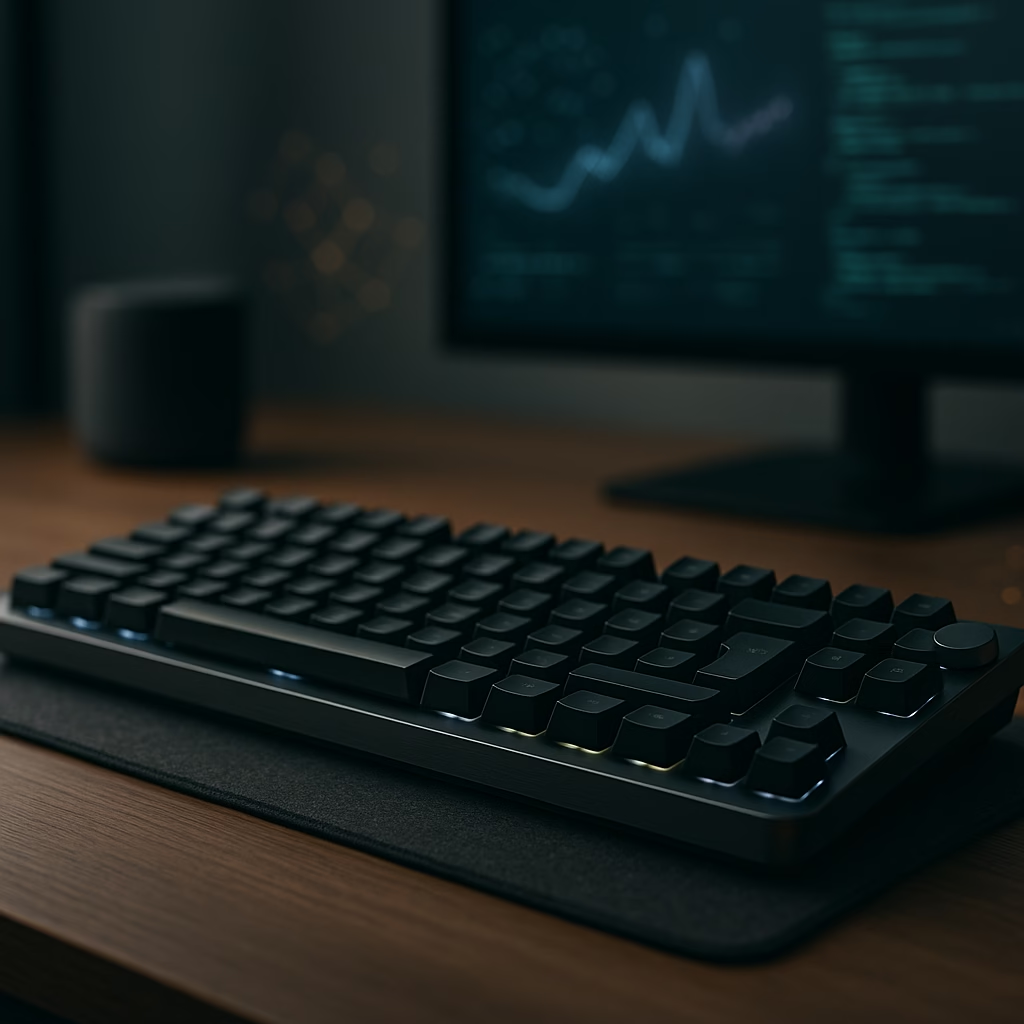
OpenAI launches first hardware product a customizable AI powered keyboard
OpenAI has moved from pure software to physical devices with the introduction of its first branded hardware product: a programmable, AI‑centric keyboard that lights up to show dynamic shortcuts. The device, officially called the OpenAI Key, is designed to make interacting with ChatGPT and other AI tools as seamless as pressing a single key, signaling a new phase in the broader AI market growth story.
A compact, light‑up keyboard built around AI workflows
The OpenAI Key is not a full-size keyboard meant to replace your existing one. Instead, it functions more like a macro pad or productivity keypad, sitting alongside your main keyboard. Its defining feature is a grid of keys, each with an individual RGB backlight and small display under a translucent cap. These keys can change icons, colors, and labels depending on what you are doing.
At its core, the device is built to trigger custom prompts and AI workflows with a single press. Instead of copying and pasting text into a browser tab, users can:
- Send selected text directly to ChatGPT for rewriting or summarization
- Trigger a preconfigured prompt for coding assistance or debugging
- Launch AI tools for meeting notes, email replies, or document drafting
- Switch between different models or tasks with context‑aware keys
Each key’s lighting and iconography adjust in real time, so your AI shortcuts can visually reflect the current app, workspace, or project. This is similar in spirit to devices like the Elgato Stream Deck, but with deeper integration into OpenAI’s own ecosystem and a heavier emphasis on productivity automation rather than just streaming or hotkeys.
Deep integration with ChatGPT and the OpenAI ecosystem
OpenAI is positioning the keyboard as a front door to its services. Out of the box, it is built to work tightly with ChatGPT, including desktop and web experiences. The company’s software allows users to map keys to specific AI actions, such as:
- “Explain this” for highlighted text in a document
- “Generate code” when working in a code editor
- “Summarize email thread” from supported clients
- “Draft response” with adjustable tone and length
Because the hardware is tailored to OpenAI’s own platform, it also acts as a physical reminder of the company’s ambition to make AI feel like an integrated part of daily computing—less like a separate website and more like a background capability. This aligns with the broader technology trend of embedding AI into operating systems, productivity suites, and enterprise tools, which has been a major driver of AI market growth and investment flows.
Why a hardware keyboard, and why now?
For a company known for software, releasing a physical device might seem unexpected. But there are several strategic reasons why this move fits the current economic outlook for AI companies:
- Differentiation in a crowded market: As more competitors launch large language models and AI chatbots, branded hardware creates a visible, tangible product that ties users to OpenAI’s ecosystem.
- New revenue streams: Hardware margins and accessories give AI companies ways to monetize beyond API usage and enterprise licensing, which can help smooth volatility driven by broader inflation trends and cloud computing costs.
- Habit‑forming UX: A dedicated AI key can make users more likely to rely on ChatGPT throughout the day, embedding it into workflows for writing, coding, and research.
- Signal to developers and partners: Releasing hardware showcases OpenAI’s willingness to experiment with end‑user devices, which may encourage third‑party integrations and accessories.
The device also taps into a long-running niche in the PC world: mechanical keyboards and macro pads. Enthusiasts already invest in custom keycaps, programmable layers, and RGB lighting to streamline tasks. OpenAI’s approach builds on that tradition but anchors it in AI-first workflows rather than simple shortcuts or media controls.
Positioning in the broader AI hardware landscape
The OpenAI Key arrives at a time when major tech firms are scrambling to translate AI buzz into physical products. From AI PCs marketed with dedicated neural processing units to phones touting on‑device generative tools, hardware makers are betting that users want frictionless access to AI without juggling tabs and apps.
OpenAI’s keyboard is more modest than a full PC or smartphone redesign, but it follows the same logic: put AI one button press away. Instead of building an entire computer, OpenAI is slotting its device into the existing ecosystem of Windows, macOS, and other platforms, leaning on software integration rather than proprietary operating systems.
This approach also reduces risk. The company does not have to compete head‑on with established PC or phone manufacturers. Instead, it can treat the keyboard as a specialized accessory for people already invested in AI-powered productivity—developers, writers, analysts, and knowledge workers whose jobs are being reshaped by automation and evolving productivity tools.
Customization and potential developer ecosystem
A key selling point is customization. Users can configure layouts tailored to their own workflows—one profile for coding, another for content creation, another for research or data analysis. Because each key can display different icons and colors, a single device can adapt to multiple roles throughout the day.
While OpenAI’s initial focus is on official software support, the form factor naturally invites a developer community. If OpenAI exposes APIs or configuration tools, third‑party developers could potentially build:
- Integrations with IDEs, project management tools, and design software
- Prebuilt layouts for specific professions, like legal, finance, or marketing
- Open-source profiles that combine multiple AI tools and services
Such an ecosystem would mirror how macro pads and customizable keyboards have long been used in video editing, music production, and streaming—only now with a heavy emphasis on AI‑driven tasks and automation.
What this means for everyday users
For most people, the OpenAI Key will not be a mandatory purchase. It is an accessory aimed at users who already lean heavily on AI and want to shave seconds off repetitive tasks. But it illustrates a broader shift in how AI is being integrated into daily computing:
- AI is moving from discrete “sessions” in a browser to ambient assistance woven through apps.
- Physical interfaces—keys, lights, displays—are becoming part of how we understand and control AI systems.
- Specialized hardware may become common in offices where AI‑assisted writing, coding, and analysis are everyday requirements.
As organizations navigate evolving economic outlook conditions and pressure to boost productivity, tools that streamline knowledge work are increasingly attractive. Whether the OpenAI Key becomes a mainstream accessory or remains a niche productivity gadget, it marks an important step in turning generative AI from an abstract cloud service into something you can literally reach out and press.
Reference Sources
OpenAI’s first branded hardware is a light‑up keyboard – Ars Technica





Leave a Reply